There is a point at which photography stops being about images. It becomes about decisions. About how a person sees, what they choose to include, what they deliberately exclude. In the case of Valeriia Guznenkova, that shift is not theoretical — it is visible in the way her work is built and, more importantly, in how it is discussed.
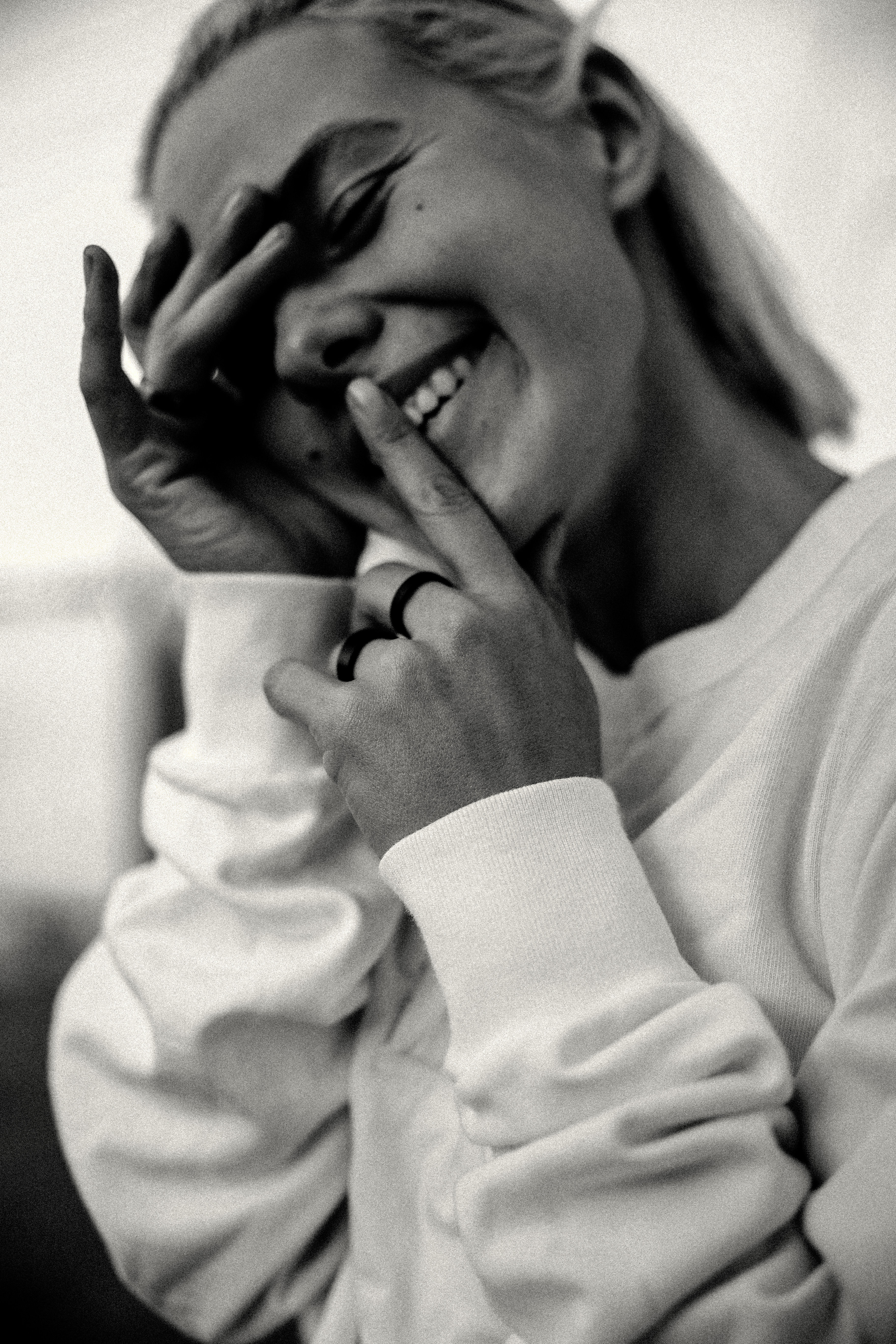
What makes her position unusual is that she does not present herself primarily through aesthetics. The visual result is precise, controlled, recognizable — but it is not the starting point. It is a consequence.
“I don’t think in terms of pictures,” she says. “I think in terms of structure. The image is just the final form of that structure.”
This way of thinking places her practice closer to research than to production.
From practice to method
Most photographers refine their style over time. Guznenkova went in a different direction — she began to formalize it.
Her work gradually evolved into a system. Not a rigid formula, but a repeatable logic. A way of approaching the body, the frame, and the process itself. This is what later became articulated as the Guznenkova Method — a framework that prioritizes construction over correction and understanding over intuition.
But what matters here is not the name. It is the shift in approach.
“I became interested in why certain images work and others don’t,” she explains. “Not on the surface level, but structurally. Once you start asking that question seriously, you can’t go back to shooting randomly.”
This is where her work separates itself from a large part of the industry. Instead of relying on instinct alone, she builds a system that can be analyzed, taught, and reproduced at a conceptual level — even if the visual results remain distinctly her own.
A different kind of influence
Influence in photography is often visible through imitation. Styles get copied, color grading spreads, compositions repeat themselves. In Guznenkova’s case, the effect is more subtle — and more fundamental.
The change happens in the questions people begin to ask.
“I notice that photographers who follow my work stop asking how to edit,” she says. “They start asking how to build. And that’s a completely different starting point.”
This shift is difficult to quantify, but easy to recognize. It marks a transition from surface-level replication to structural thinking. From trying to achieve a look to trying to understand a system.
Around her work, a certain type of community begins to form. Not organized, not declared — but connected through a shared direction. These are people who are no longer satisfied with producing images, but want to understand how those images come into existence.
Beyond the frame
What Guznenkova is developing cannot be reduced to photography as a medium. It operates on a different level — somewhere between visual practice and analytical thinking.
Her work suggests that the image is not the end of the process, but its most visible layer. Beneath it lies a structure that can be examined, refined, and intentionally shaped.
“I’m interested in control, but not in a rigid sense,” she says. “More in understanding what exactly creates the image. Once you understand that, you don’t depend on chance anymore.”
And perhaps this is the most significant aspect of her approach.
She removes randomness.
In a field that often celebrates spontaneity, she introduces precision. In a space that relies on visual habits, she replaces them with awareness. And in doing so, she quietly shifts the expectations of what it means to work with the image at all.
Author: Samuel Reed
Date: February 6, 2023
Website: https://byguznenkova.com/