Beyond art: How Uliana Sal turned personal experience into a cultural conversation

Artist, curator, author: Why Uliana Sal’s new book matters beyond the art world

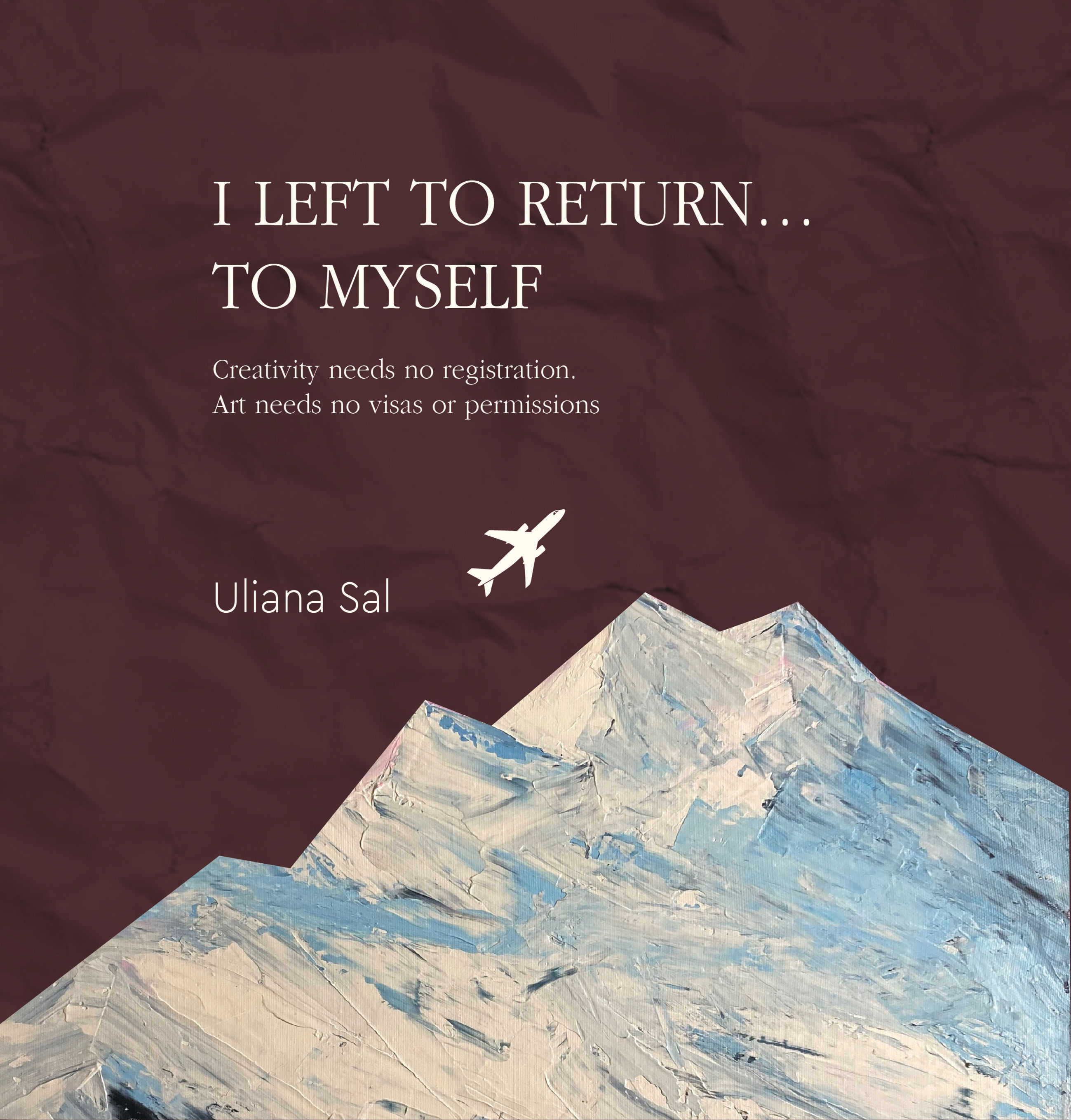
The release of I Left to Return… to Myself marks an important milestone in the career of contemporary artist and curator Uliana Sal. Published by Be Art New York and distributed internationally in print and digital formats across 49 countries through more than 40,000 points of sale, the book represents far more than a personal memoir. It is a contribution to an ongoing professional conversation about art, identity, migration, cultural adaptation, and the role of creativity in periods of profound change.

At a time when millions of people around the world are navigating questions of belonging, relocation, and self-reinvention, Uliana Sal offers a perspective shaped not only by personal experience but also by years of professional engagement with artists, exhibitions, and contemporary cultural discourse.

What makes this publication particularly significant is the intersection of three professional roles that rarely exist within one person: artist, curator, and author.

As a visual artist, Uliana has developed a recognizable abstract language centered on memory, emotional landscapes, and the relationship between people and place. Her work has been presented internationally, including institutional exhibitions such as Woman: Balancing Our World at the Museum of International Art (MoRA) in New Jersey and Talents of Russia at the State Tretyakov Gallery in Moscow. She has also participated in major international art fairs, including Spectrum Miami, and received recognition from international juried organizations such as the Circle Foundation for the Arts.

However, her contribution extends well beyond her own artistic practice.

As Chief Art Manager and Curator at Artseeker Gallery in New York, Uliana has become actively involved in shaping opportunities for other artists. Through exhibition development, international collaborations, and gallery presentations at major events such as Affordable Art Fair New York, she has helped create platforms where emerging and established artists can present their work to new audiences.

Her curatorial projects focus on contemporary social narratives, emotional authenticity, and cross-cultural dialogue. Rather than treating exhibitions as collections of objects, she approaches them as conversations—spaces where artists and audiences engage with questions that define contemporary life.

This perspective is reflected throughout I Left to Return… to Myself.

The book brings together personal reflection, curatorial insight, practical guidance, and stories of artists from different countries whose lives have been shaped by relocation, transformation, and creative reinvention. In doing so, it documents a phenomenon that is increasingly relevant in contemporary culture: the way artistic identity evolves through migration and intercultural experience.

Unlike many books about art that focus primarily on technique or career development, Uliana’s work examines creativity as a mechanism of adaptation. She explores how artists rebuild professional identities in unfamiliar environments, how cultural transitions … Read more
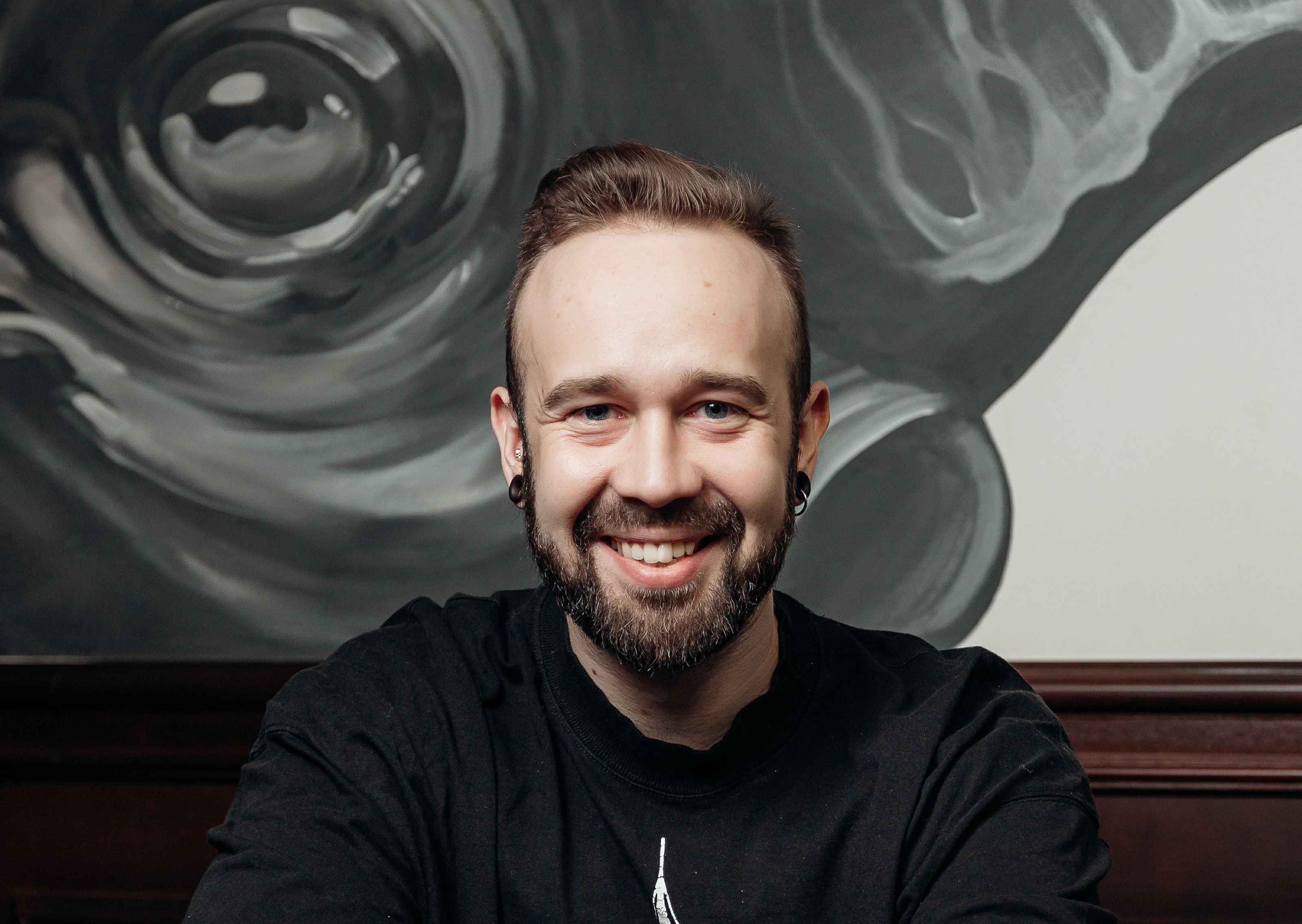
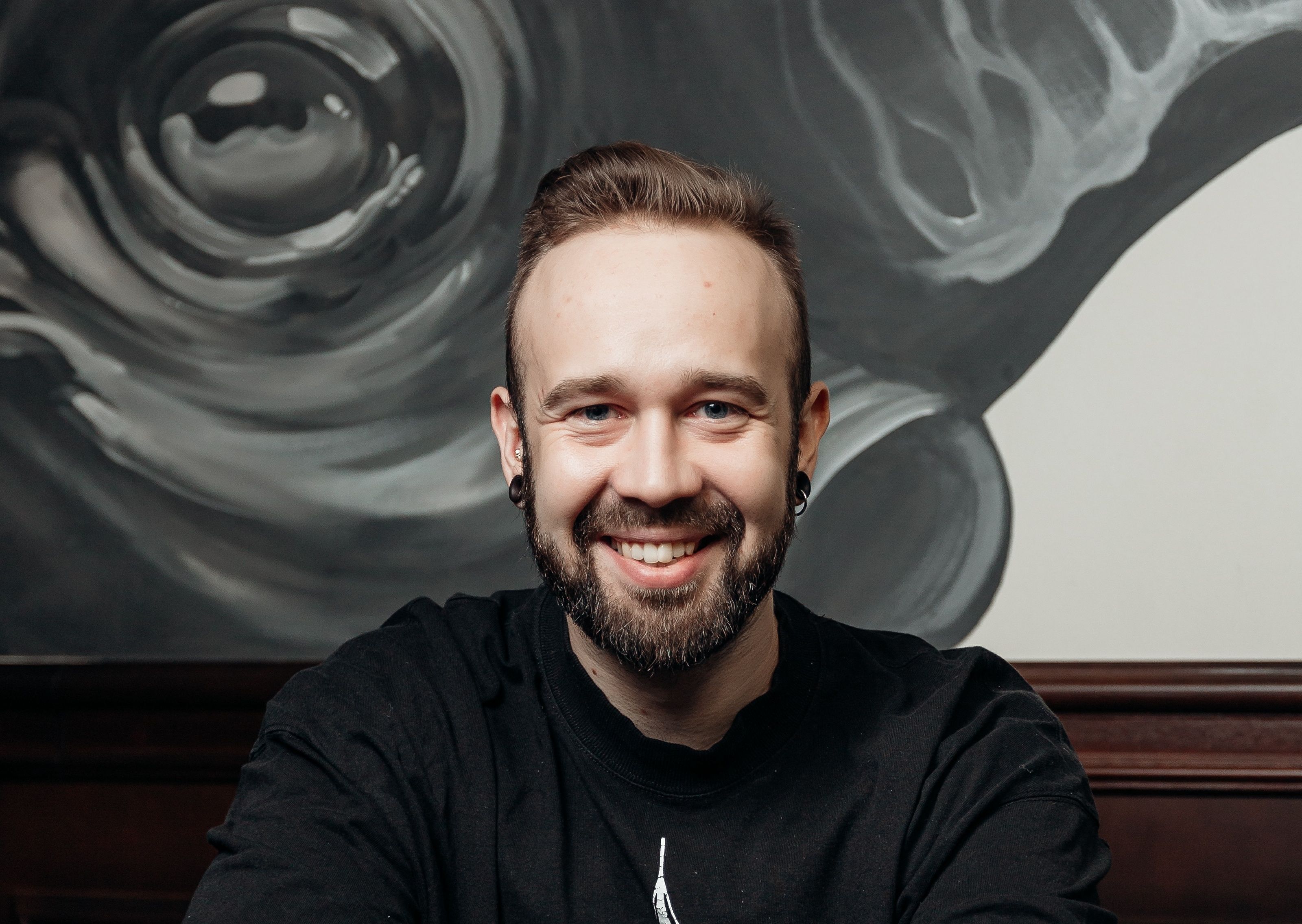
Roman Zao: “An artist’s responsibility begins where the trend ends”

In an era defined by visual speed and rapidly shifting trends, the tattoo industry is increasingly confronted with the question of artistic responsibility. We spoke with Roman Zao — an internationally recognized tattoo artist, judge at major tattoo conventions in the United States, and author of academic publications — about why following trends cannot serve as a primary compass in the profession, and where true artistic maturity begins.

— Roman, you often speak about the responsibility of the artist. What does this concept mean to you?
— Responsibility begins the moment you stop orienting yourself solely around external demand. A trend is always temporary. A tattoo stays with a person for life. An artist must understand the difference between what is fashionable today and what will still carry meaning tomorrow.

— Does that mean trends are a problem for the tattoo industry?
— Trends themselves aren’t the problem. The problem begins when they replace thinking. When an artist works only within the logic of trends, they stop being an author and become an executor. At some point, you have to ask yourself whether you’re creating an image or simply reproducing visual noise.

— How does this position translate into your own practice?
— I deliberately avoid template-based solutions. Every tattoo is a dialogue with a specific person, their body, and their personal history. The artist’s responsibility isn’t just to create something visually appealing, but to understand what exactly they are leaving on someone’s body.

— You serve as a judge at international tattoo conventions. How often do you encounter trend-driven work?
— Very often. There’s a lot of technically strong work. But when you review dozens or hundreds of tattoos in a row, it becomes immediately clear where there’s an authorial position and where there’s simply an attempt to match current fashion. Trends fade quickly. The absence of thinking is visible right away.

— What do you focus on first when judging?
— Coherence. How well form corresponds to idea, how respectfully the work engages with the body, and whether the artist understands the consequences of their decisions. In tattooing, there’s no “undo” button. That reality forces discipline.

— You are also engaged in academic research. How does that relate to the theme of responsibility?
— Directly. Research is a form of responsibility toward the profession. When you analyze tattooing as a cultural phenomenon, you begin to understand that your work doesn’t exist in isolation. It’s connected to history, society, and visual culture. That awareness changes how you approach every project.

— Can a research-based approach protect artists from blindly following trends?
— Yes, because you stop thinking in terms of “like” or “dislike” and start thinking in terms of … Read more

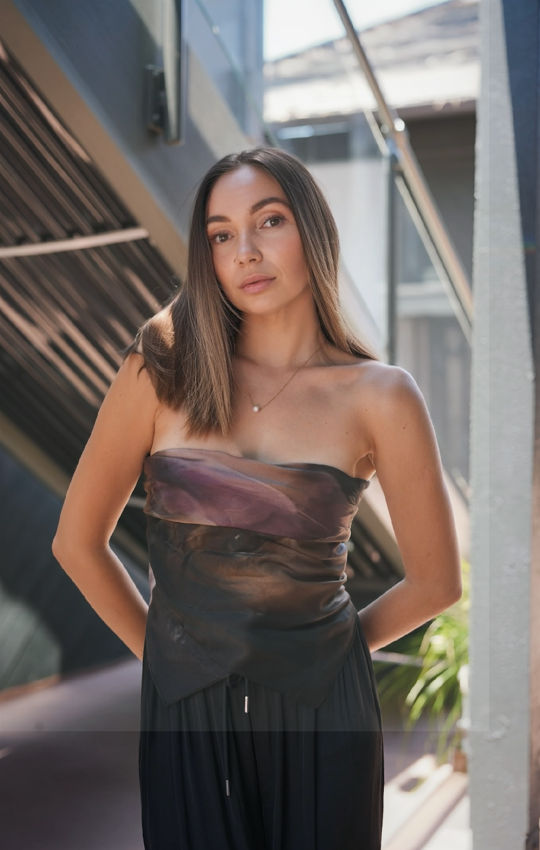
More Than a Portrait: How Dinara Akhmerova Turned Personal Experience into a Method of Seeing Yourself Again

There are photographers who create beautiful images. There are artists who tell stories. And there are people whose work begins long before the camera is lifted.

For photographer and artist Dinara Akhmerova, photography was never simply about creating portraits. It became a language she learned while rebuilding herself.

“I didn’t create this method because I wanted to invent something new,” Dinara says. “I created it because it was the only way I knew how to survive.”

Years ago, her life changed after experiencing domestic violence. Like many people who go through trauma, she found that the hardest part was not only leaving the situation—it was learning how to see herself again.

“The violence ends one day,” she says. “But the way you look at yourself can stay broken for years.”

Photography unexpectedly became part of that journey.

At first, Dinara photographed herself simply because she wanted to understand what she was feeling. She quickly realized that the camera was capturing much more than appearance. It revealed posture, hesitation, confidence, fear, tension, openness, and emotion—often before she was fully aware of them herself.

“I started noticing that every photograph told me something about my inner state,” she explains. “Not because the camera was magical, but because it gave me the opportunity to observe myself from the outside.”

Those observations gradually became a practice.

Over time, Dinara began asking different questions before every session. Instead of asking how to make someone look beautiful, she became interested in understanding how they experienced themselves.

“What are you feeling?”

“What happens in your body when you stand in front of the camera?”

“What story are you telling yourself while looking at your own image?”

These questions slowly formed the foundation of what is now known as the Dinara Akhmerova Method.

Unlike traditional portrait photography, the method is not centered on creating the “perfect” photograph. The image is important, but it is not the final goal. Instead, the photograph becomes part of a larger reflective process that encourages a person to observe themselves with greater awareness.

“I don’t try to change people,” Dinara says. “I try to create a space where they can meet themselves honestly.”

The sessions combine conversation, carefully guided attention, observation of emotional and bodily responses, and portrait photography. Rather than directing every pose mechanically, Dinara works with what naturally appears during the interaction.

She pays attention not only to facial expression but also to breathing, movement, posture, moments of silence, hesitation, and emotional shifts that unfold throughout the session.

“Sometimes people think they came for photographs,” she says. “But they leave saying they finally saw themselves.”

Interestingly, the method did not emerge from theory.

It emerged from years of professional Read more

Roman Zao: A rare example of a tattoo artist with a research-based approach to the profession

In today’s tattoo industry, discussions increasingly revolve around professionalism, technical skill, and visual execution. Far less frequently, however, the profession itself becomes the subject of deeper reflection — its cultural meaning, historical transformation, and role within contemporary society. It is precisely at this level that figures emerge who move beyond conventional professional definitions. Roman Zao is one of the few tattoo artists for whom practice and research coexist within a single intellectual framework.

His professional trajectory has been shaped not only by artistic achievements, international recognition, and participation in major tattoo conventions in the United States, but also by sustained reflection on what tattooing represents as an art form today. This approach remains uncommon in an industry where visual outcome has long taken precedence over analytical thinking.

“At a certain point, you realize that a profession stops developing if it isn’t examined,” Roman Zao explains. For him, research became a natural extension of practice rather than a detached academic pursuit. His scholarly publications focus on the evolution of tattooing and street art, tracing their path from marginal practices to recognized elements of contemporary visual culture.

This research-oriented perspective directly informs his artistic and expert work. When serving as a judge at international tattoo conventions, Roman Zao evaluates not only technique and visual impact, but also conceptual depth, cultural context, and the coherence of artistic decisions. “Technique is widely accessible today. Thinking is what still separates an artist from an executor,” he notes.

The integration of practice and theory allows him to view the industry beyond the boundaries of specific styles or trends. Roman Zao approaches tattooing as part of a broader visual ecosystem, one that exists in dialogue with contemporary art, architecture, urban space, and social processes. As a result, his professional language is understood not only within the tattoo community, but also within a wider cultural discourse.

Importantly, this research-driven approach does not distance him from active practice. On the contrary, years of hands-on experience, international festival recognition, work with healed tattoos, and participation in professional juries provide a solid empirical foundation for his research. “Without practice, theory becomes abstraction. Without theory, practice begins to repeat itself,” Roman Zao emphasizes.

His position reflects a deeper shift taking place within the tattoo industry. As tattooing is increasingly recognized as a form of contemporary art, the need for analytical language, critique, and interpretation becomes more pronounced. Artists capable of articulating these processes with clarity and professional insight emerge as key figures within a new cultural paradigm.

Roman Zao exemplifies how a tattoo artist can move beyond a purely practical role and become a researcher of the profession itself. His academic work, expert activity, and international recognition shape the image of a … Read more

Art That Inspires: An Interview with Elena Stepkina

In a world where most artists focus on private commissions and modest sales, there are those who transcend these norms. Elena Stepkina is one of them. She not only creates vibrant paintings but also redefines the role of art in modern society, elevating it to a new level. In this interview, we spoke with Elena about her journey, achievements, and perspective on art.

interview

— Elena, can you tell us how you began your journey in art?

Art has always been a part of my life. Even as a child, I felt that I could express what words couldn’t through a brush. I received a higher education in fine arts, which gave me not only professionalism but also the ability to think far beyond conventional boundaries.

— Many artists remain within the realm of private creativity. Why was it important for you to participate in exhibitions and competitions?

Exhibitions and competitions are opportunities not only to make a name for yourself but also to prove your professionalism at the highest level. It’s recognition documented by professionals. Initially, it was all about overcoming “impostor syndrome.” I wanted to feel more confident as an artist and have official proof of my skills. It’s a challenging but fascinating path. After every exhibition or competition victory, I felt myself reaching new heights. I eventually achieved milestones like my solo exhibition at the Tretyakov Gallery, which significantly changed my standing in the art world.

— What’s the secret to success in such projects?

First, it’s about hard work and constant development—taking one step at a time. Success doesn’t come from dreaming of “waking up famous” one day but from relentlessly working toward your goal every day. It’s not always smooth, but those who persevere ultimately succeed. Second, consistency and planning are essential. I didn’t make chaotic moves; I always had a plan—and a backup plan. I set a final goal, broke it down into small, manageable steps, and executed them daily. That’s my secret to success. For example, to secure publications in over 80 countries, I sent more than 300 emails. Initially, nothing worked, but after revising my text a few times, I began receiving invitations from publishers. Presentation matters greatly.

— You mentioned belonging to top-tier art unions. How difficult is it to join such organizations?

It’s extremely difficult. It requires serious achievements and international recognition. For instance, joining the Eurasian Art Union or the International Union of Teacher-Artists isn’t possible simply by paying a fee. It’s the result of years of hard work and numerous victories in prestigious competitions.

— You’re also actively involved with the media. How does this help your career?

Media play a crucial role in promoting an artist. For example, Read more