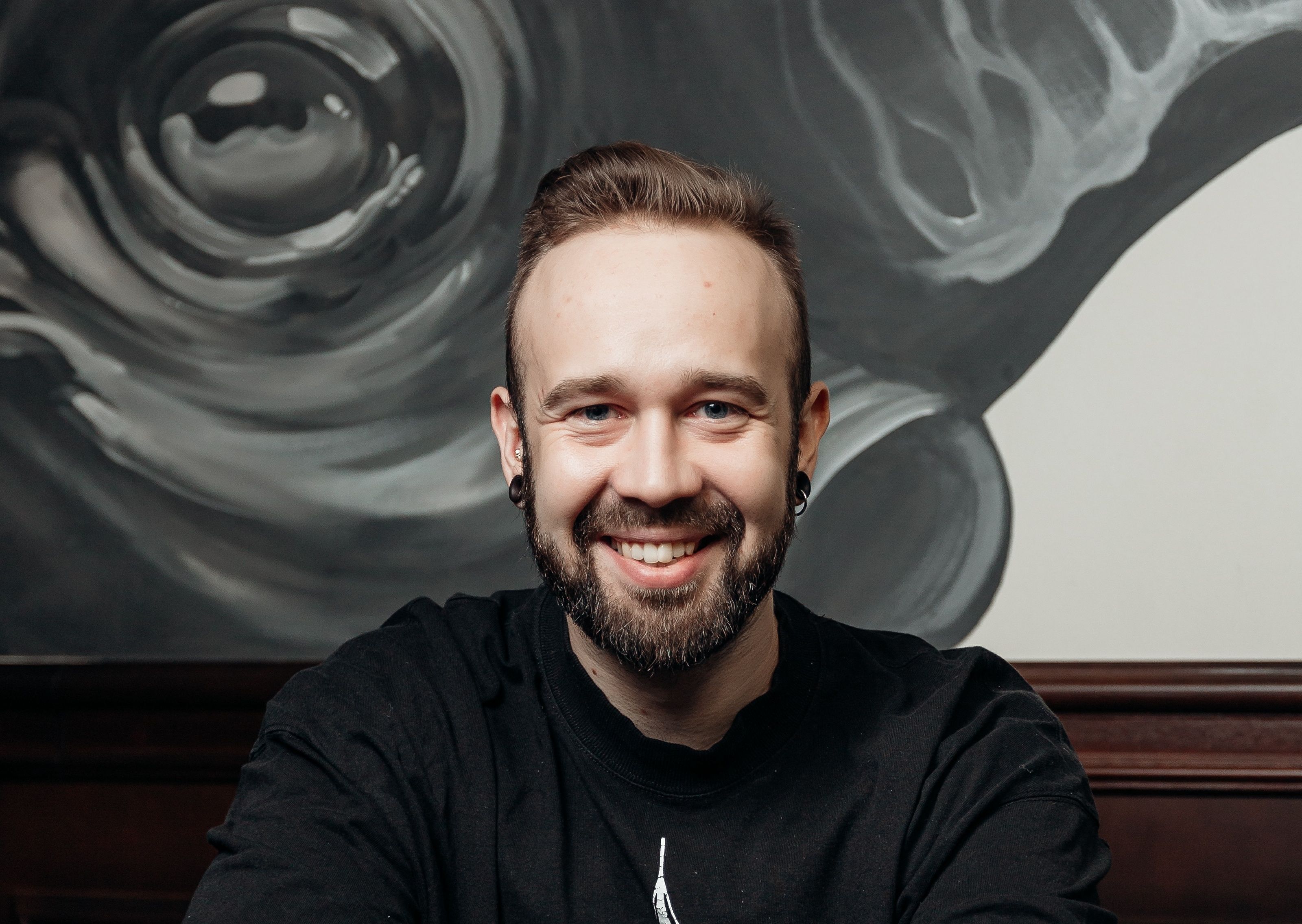
Roman Zao: A rare example of a tattoo artist with a research-based approach to the profession

In today’s tattoo industry, discussions increasingly revolve around professionalism, technical skill, and visual execution. Far less frequently, however, the profession itself becomes the subject of deeper reflection — its cultural meaning, historical transformation, and role within contemporary society. It is precisely at this level that figures emerge who move beyond conventional professional definitions. Roman Zao is one of the few tattoo artists for whom practice and research coexist within a single intellectual framework.

His professional trajectory has been shaped not only by artistic achievements, international recognition, and participation in major tattoo conventions in the United States, but also by sustained reflection on what tattooing represents as an art form today. This approach remains uncommon in an industry where visual outcome has long taken precedence over analytical thinking.

“At a certain point, you realize that a profession stops developing if it isn’t examined,” Roman Zao explains. For him, research became a natural extension of practice rather than a detached academic pursuit. His scholarly publications focus on the evolution of tattooing and street art, tracing their path from marginal practices to recognized elements of contemporary visual culture.

This research-oriented perspective directly informs his artistic and expert work. When serving as a judge at international tattoo conventions, Roman Zao evaluates not only technique and visual impact, but also conceptual depth, cultural context, and the coherence of artistic decisions. “Technique is widely accessible today. Thinking is what still separates an artist from an executor,” he notes.

The integration of practice and theory allows him to view the industry beyond the boundaries of specific styles or trends. Roman Zao approaches tattooing as part of a broader visual ecosystem, one that exists in dialogue with contemporary art, architecture, urban space, and social processes. As a result, his professional language is understood not only within the tattoo community, but also within a wider cultural discourse.

Importantly, this research-driven approach does not distance him from active practice. On the contrary, years of hands-on experience, international festival recognition, work with healed tattoos, and participation in professional juries provide a solid empirical foundation for his research. “Without practice, theory becomes abstraction. Without theory, practice begins to repeat itself,” Roman Zao emphasizes.

His position reflects a deeper shift taking place within the tattoo industry. As tattooing is increasingly recognized as a form of contemporary art, the need for analytical language, critique, and interpretation becomes more pronounced. Artists capable of articulating these processes with clarity and professional insight emerge as key figures within a new cultural paradigm.

Roman Zao exemplifies how a tattoo artist can move beyond a purely practical role and become a researcher of the profession itself. His academic work, expert activity, and international recognition shape the image of a … Read more

Art That Inspires: An Interview with Elena Stepkina

In a world where most artists focus on private commissions and modest sales, there are those who transcend these norms. Elena Stepkina is one of them. She not only creates vibrant paintings but also redefines the role of art in modern society, elevating it to a new level. In this interview, we spoke with Elena about her journey, achievements, and perspective on art.

interview

— Elena, can you tell us how you began your journey in art?

Art has always been a part of my life. Even as a child, I felt that I could express what words couldn’t through a brush. I received a higher education in fine arts, which gave me not only professionalism but also the ability to think far beyond conventional boundaries.

— Many artists remain within the realm of private creativity. Why was it important for you to participate in exhibitions and competitions?

Exhibitions and competitions are opportunities not only to make a name for yourself but also to prove your professionalism at the highest level. It’s recognition documented by professionals. Initially, it was all about overcoming “impostor syndrome.” I wanted to feel more confident as an artist and have official proof of my skills. It’s a challenging but fascinating path. After every exhibition or competition victory, I felt myself reaching new heights. I eventually achieved milestones like my solo exhibition at the Tretyakov Gallery, which significantly changed my standing in the art world.

— What’s the secret to success in such projects?

First, it’s about hard work and constant development—taking one step at a time. Success doesn’t come from dreaming of “waking up famous” one day but from relentlessly working toward your goal every day. It’s not always smooth, but those who persevere ultimately succeed. Second, consistency and planning are essential. I didn’t make chaotic moves; I always had a plan—and a backup plan. I set a final goal, broke it down into small, manageable steps, and executed them daily. That’s my secret to success. For example, to secure publications in over 80 countries, I sent more than 300 emails. Initially, nothing worked, but after revising my text a few times, I began receiving invitations from publishers. Presentation matters greatly.

— You mentioned belonging to top-tier art unions. How difficult is it to join such organizations?

It’s extremely difficult. It requires serious achievements and international recognition. For instance, joining the Eurasian Art Union or the International Union of Teacher-Artists isn’t possible simply by paying a fee. It’s the result of years of hard work and numerous victories in prestigious competitions.

— You’re also actively involved with the media. How does this help your career?

Media play a crucial role in promoting an artist. For example, Read more

From Tretyakov Gallery to Manhattan: An Artist Whose Paintings Conquer the World

The story of Elena Stepkina is a modern odyssey, a journey that begins in a small town with nine-month-long winters and culminates in the heights of international art recognition. With her talent, resilience, and innovative vision, Elena has forged a path from a personal exhibition at the iconic Tretyakov Gallery in Moscow to acclaim in Manhattan, the beating heart of the global art world.

Tretyakov Gallery: A Temple of Russian Art

The Tretyakov Gallery is more than a museum—it is a cultural treasure that stands as a beacon of Russian artistic heritage. Founded in 1856 by Pavel Tretyakov, the gallery has grown into one of the most prestigious art institutions in the world, housing masterpieces by greats like Ilya Repin, Ivan Shishkin, and Wassily Kandinsky. It is a place where the history and soul of Russian art come to life.

To exhibit at the Tretyakov Gallery is to become a part of that legacy, to be counted among the artists who have shaped not just Russian but global art history. This honor is reserved for the most exceptional talents, and Elena Stepkina’s personal exhibition there was a crowning achievement. For an artist, it is comparable to an Olympic gold medal—a symbol of excellence, dedication, and the highest level of mastery.

Elena’s invitation to exhibit at the Tretyakov Gallery was not a matter of chance. It came as a result of her numerous accomplishments: victories in international art competitions, membership in elite organizations such as the Eurasian Art Union and the International Union of Teachers-Artists, and her active role as a juror in influential art projects like Art Ptica and Sunlight. Her ability to mentor emerging artists, organize events, and contribute to the art world through publishing and public appearances further cemented her reputation as a leading figure in contemporary art.Tretyakov-Gallery

Manhattan: The Mecca of Modern Art

After achieving monumental success in Russia, Elena set her sights on new horizons and moved to the United States in 2023. Within just six months, she organized a solo exhibition in Manhattan—a feat that few artists, even those with established careers, can claim.

The exhibition, titled Shifting Horizons, ran from June 30 to July 7, 2023, and was an artistic triumph. Held in the bustling heart of Manhattan, the event showcased Elena’s unique ability to blend emotional depth with visual storytelling. Works such as Golden Emanations, Caramel Delight, and Sea Serenity captivated audiences with their vibrancy and evocative power. Each painting told a story, immersing viewers in a world of beauty, thought, and emotion.

Manhattan is home to some of the most celebrated art institutions in the world, including the Museum of Modern Art (MoMA) and the Metropolitan Museum of Art. It is a Read more

Painter Charleston SC: Enhancing Your Home’s Beauty

Charleston, South Carolina, renowned for its rich history, vibrant culture, and stunning architecture, is a city where artistry thrives. From historic landmarks to modern developments, the beauty of Charleston lies not only in its cobblestone streets and antebellum homes but also in the meticulous details of its paintwork. Whether you’re renovating a historic property or refreshing your modern abode, finding the right painter in Charleston, SC, is essential to enhancing your home’s beauty.

What Makes a Great Painter?

A great painter possesses a unique blend of skill, creativity, and attention to detail. From mastering various painting techniques to understanding color theory, a professional painter must have the expertise to transform your vision into reality. Experience is another crucial aspect as it ensures that the painter can tackle any challenges that may arise during the project.

Importance of Hiring a Professional Painter

While DIY painting projects may seem appealing, hiring a professional painter offers numerous advantages. Not only does it guarantee a high-quality finish, but it also saves you valuable time and effort. Professional painters have the necessary tools, knowledge, and techniques to complete the job efficiently, allowing you to focus on other aspects of your home improvement project.

Finding the Right Painter in Charleston, SC

With a plethora of painting contractors in Charleston, finding the right one can seem daunting. However, thorough research and careful consideration can lead you to the perfect painter for your needs. Start by exploring local painters in your area and take the time to read reviews and testimonials from previous clients to gauge their reputation and reliability.

Factors to Consider Before Hiring a Painter

Before hiring a painter, consider factors such as your budget, project timeline, and specific requirements. Communicate your expectations clearly and discuss any special considerations or preferences you may have. Additionally, inquire about the painter’s insurance coverage and licensing to ensure they meet industry standards.

Benefits of Hiring a Local Painter

Opting for a local painter offers several benefits beyond convenience. Local painters are familiar with the unique climate and architecture of Charleston, allowing them to recommend suitable paint types and application methods for optimal results. Furthermore, local painters are more accessible for follow-up services and maintenance, ensuring long-term satisfaction with your paint job.

Painter Charleston SC: Top Picks

In Charleston, SC, several painting companies stand out for their exceptional craftsmanship and customer service. Whether you’re looking to refresh your home’s interior or enhance its curb appeal, these top picks offer a range of services to meet your needs.

Client Testimonials

Don’t just take our word for it! Hear what our satisfied customers have to say about their experience with Charleston painters:

“I was amazed by the professionalism and attention to detail … Read more

The Breath and Purity of Creation

Last week in Dublin was pretty noisy, as there was Kristina Bagaeva’s exhibition. The exhibition, united by the theme of the interaction of nature and humans, is designed to show the influence of Homo sapiens on what we see now in the world and how we endlessly strive for progress while turning to nature and its greatness in moments of despair.

One of the artists whose works were presented at such an exhibition for the first time was Kristina Bagaeva. Her video art is primarily known for the way it balances on a fine line with performance: initially planned mise en scènes in Kristina’s creations begin to live their own lives over time. 

A distinctive feature of the artist is the desire for balance and moderation. It is these qualities that she preaches in many of her video arts. Her works are deep and hypnotic. They make the viewer freeze in anticipation of a new discovery. A person seems to hold “on the edge” for a few seconds before comprehending something big and important, which, like a powerful tide, falls on him from all sides.

However, in her new works, the artist turned to the elements, which, according to her words, give her strength in the most difficult moments of life – the sea. The main object here are waves, and the subject of research is the person himself and his condition, because this video is not just work but also meditation. Kristina invites a person to plunge into the sea of his own thoughts, experiences, and feelings and let each incoming wave carry away his sadness.

The presented video project includes a whole list of interconnected stages through which the viewer must pass as a meditation project. For example, it all starts with a breathing meditation; viewers are invited to undergo a breathing meditation (procedure) under the video sequence of sea waves: the tide of the wave is inhaled, the ebb is exhaled. Breathing is aligned exactly with the sound and rhythm of the sea vibrations and as close as possible to the natural rhythms of nature. In the process, participants begin to feel that the movement of the waves is the breath of the sea, infinite in time and space, and that their own breathing and their lives are also continuous.

“In a world of endless speeds and stresses, a person should have the opportunity to escape from the struggle with obsessive reality and live without proving anything to anyone – there should be a place and time for love and creativity,” says Kristina. “And in order for creativity to be truthful and sincere, the world needs attunement. However, the world is big, and the person in it Read more