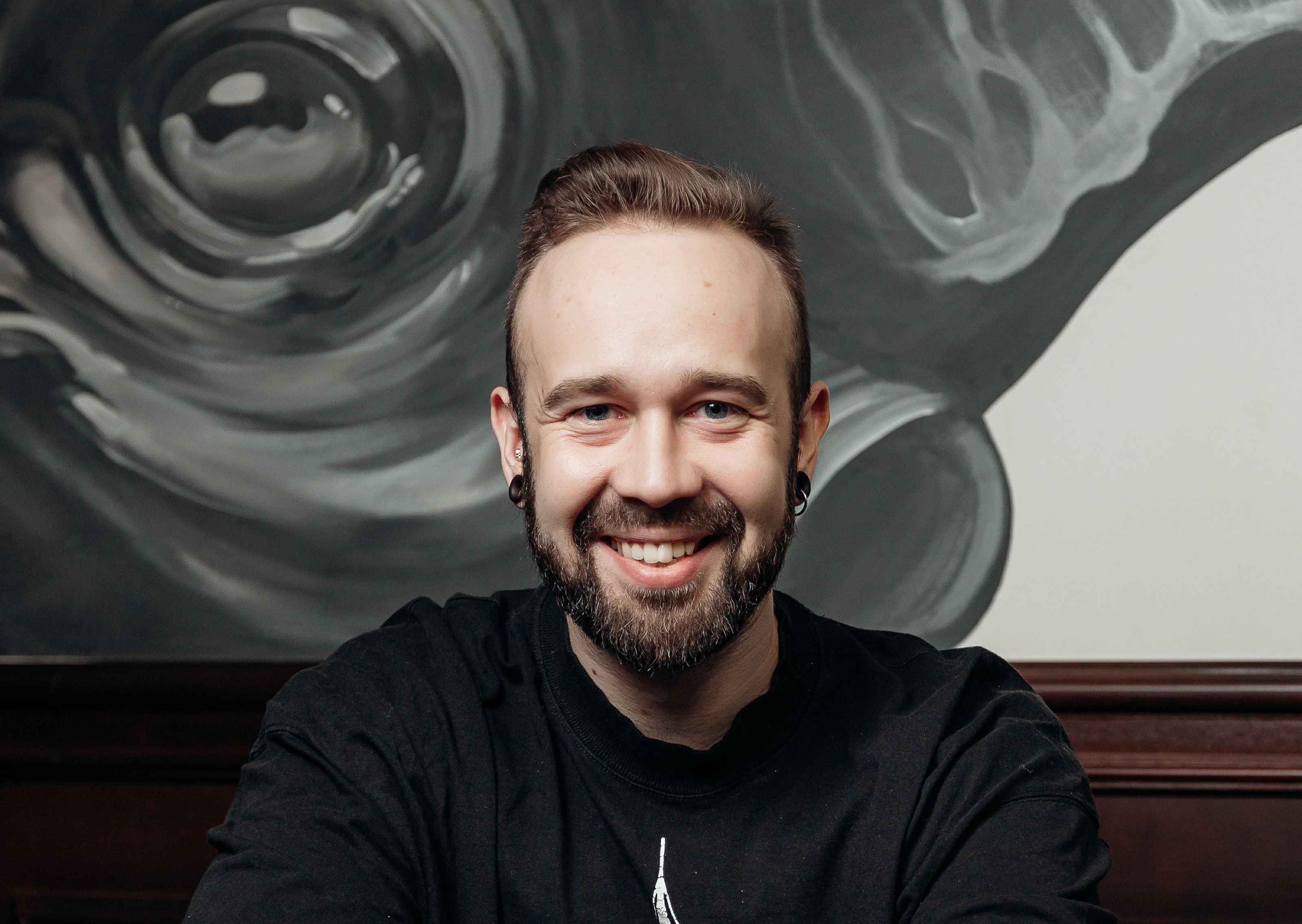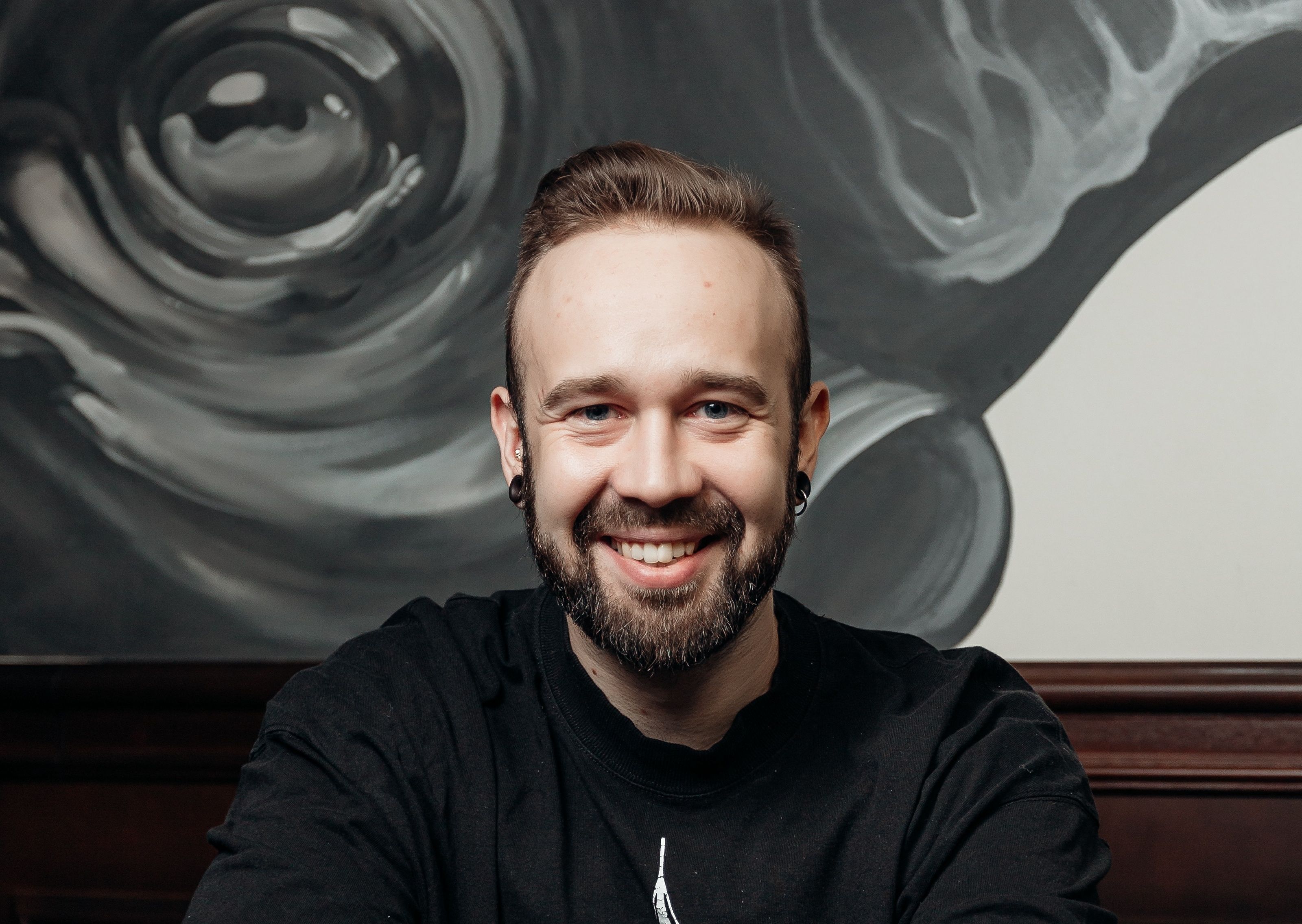
Roman Zao: “An artist’s responsibility begins where the trend ends”

In an era defined by visual speed and rapidly shifting trends, the tattoo industry is increasingly confronted with the question of artistic responsibility. We spoke with Roman Zao — an internationally recognized tattoo artist, judge at major tattoo conventions in the United States, and author of academic publications — about why following trends cannot serve as a primary compass in the profession, and where true artistic maturity begins.

— Roman, you often speak about the responsibility of the artist. What does this concept mean to you?
— Responsibility begins the moment you stop orienting yourself solely around external demand. A trend is always temporary. A tattoo stays with a person for life. An artist must understand the difference between what is fashionable today and what will still carry meaning tomorrow.

— Does that mean trends are a problem for the tattoo industry?
— Trends themselves aren’t the problem. The problem begins when they replace thinking. When an artist works only within the logic of trends, they stop being an author and become an executor. At some point, you have to ask yourself whether you’re creating an image or simply reproducing visual noise.

— How does this position translate into your own practice?
— I deliberately avoid template-based solutions. Every tattoo is a dialogue with a specific person, their body, and their personal history. The artist’s responsibility isn’t just to create something visually appealing, but to understand what exactly they are leaving on someone’s body.

— You serve as a judge at international tattoo conventions. How often do you encounter trend-driven work?
— Very often. There’s a lot of technically strong work. But when you review dozens or hundreds of tattoos in a row, it becomes immediately clear where there’s an authorial position and where there’s simply an attempt to match current fashion. Trends fade quickly. The absence of thinking is visible right away.

— What do you focus on first when judging?
— Coherence. How well form corresponds to idea, how respectfully the work engages with the body, and whether the artist understands the consequences of their decisions. In tattooing, there’s no “undo” button. That reality forces discipline.

— You are also engaged in academic research. How does that relate to the theme of responsibility?
— Directly. Research is a form of responsibility toward the profession. When you analyze tattooing as a cultural phenomenon, you begin to understand that your work doesn’t exist in isolation. It’s connected to history, society, and visual culture. That awareness changes how you approach every project.

— Can a research-based approach protect artists from blindly following trends?
— Yes, because you stop thinking in terms of “like” or “dislike” and start thinking in terms of … Read more

Roman Zao: A rare example of a tattoo artist with a research-based approach to the profession

In today’s tattoo industry, discussions increasingly revolve around professionalism, technical skill, and visual execution. Far less frequently, however, the profession itself becomes the subject of deeper reflection — its cultural meaning, historical transformation, and role within contemporary society. It is precisely at this level that figures emerge who move beyond conventional professional definitions. Roman Zao is one of the few tattoo artists for whom practice and research coexist within a single intellectual framework.

His professional trajectory has been shaped not only by artistic achievements, international recognition, and participation in major tattoo conventions in the United States, but also by sustained reflection on what tattooing represents as an art form today. This approach remains uncommon in an industry where visual outcome has long taken precedence over analytical thinking.

“At a certain point, you realize that a profession stops developing if it isn’t examined,” Roman Zao explains. For him, research became a natural extension of practice rather than a detached academic pursuit. His scholarly publications focus on the evolution of tattooing and street art, tracing their path from marginal practices to recognized elements of contemporary visual culture.

This research-oriented perspective directly informs his artistic and expert work. When serving as a judge at international tattoo conventions, Roman Zao evaluates not only technique and visual impact, but also conceptual depth, cultural context, and the coherence of artistic decisions. “Technique is widely accessible today. Thinking is what still separates an artist from an executor,” he notes.

The integration of practice and theory allows him to view the industry beyond the boundaries of specific styles or trends. Roman Zao approaches tattooing as part of a broader visual ecosystem, one that exists in dialogue with contemporary art, architecture, urban space, and social processes. As a result, his professional language is understood not only within the tattoo community, but also within a wider cultural discourse.

Importantly, this research-driven approach does not distance him from active practice. On the contrary, years of hands-on experience, international festival recognition, work with healed tattoos, and participation in professional juries provide a solid empirical foundation for his research. “Without practice, theory becomes abstraction. Without theory, practice begins to repeat itself,” Roman Zao emphasizes.

His position reflects a deeper shift taking place within the tattoo industry. As tattooing is increasingly recognized as a form of contemporary art, the need for analytical language, critique, and interpretation becomes more pronounced. Artists capable of articulating these processes with clarity and professional insight emerge as key figures within a new cultural paradigm.

Roman Zao exemplifies how a tattoo artist can move beyond a purely practical role and become a researcher of the profession itself. His academic work, expert activity, and international recognition shape the image of a … Read more

Art That Inspires: An Interview with Elena Stepkina

In a world where most artists focus on private commissions and modest sales, there are those who transcend these norms. Elena Stepkina is one of them. She not only creates vibrant paintings but also redefines the role of art in modern society, elevating it to a new level. In this interview, we spoke with Elena about her journey, achievements, and perspective on art.

interview

— Elena, can you tell us how you began your journey in art?

Art has always been a part of my life. Even as a child, I felt that I could express what words couldn’t through a brush. I received a higher education in fine arts, which gave me not only professionalism but also the ability to think far beyond conventional boundaries.

— Many artists remain within the realm of private creativity. Why was it important for you to participate in exhibitions and competitions?

Exhibitions and competitions are opportunities not only to make a name for yourself but also to prove your professionalism at the highest level. It’s recognition documented by professionals. Initially, it was all about overcoming “impostor syndrome.” I wanted to feel more confident as an artist and have official proof of my skills. It’s a challenging but fascinating path. After every exhibition or competition victory, I felt myself reaching new heights. I eventually achieved milestones like my solo exhibition at the Tretyakov Gallery, which significantly changed my standing in the art world.

— What’s the secret to success in such projects?

First, it’s about hard work and constant development—taking one step at a time. Success doesn’t come from dreaming of “waking up famous” one day but from relentlessly working toward your goal every day. It’s not always smooth, but those who persevere ultimately succeed. Second, consistency and planning are essential. I didn’t make chaotic moves; I always had a plan—and a backup plan. I set a final goal, broke it down into small, manageable steps, and executed them daily. That’s my secret to success. For example, to secure publications in over 80 countries, I sent more than 300 emails. Initially, nothing worked, but after revising my text a few times, I began receiving invitations from publishers. Presentation matters greatly.

— You mentioned belonging to top-tier art unions. How difficult is it to join such organizations?

It’s extremely difficult. It requires serious achievements and international recognition. For instance, joining the Eurasian Art Union or the International Union of Teacher-Artists isn’t possible simply by paying a fee. It’s the result of years of hard work and numerous victories in prestigious competitions.

— You’re also actively involved with the media. How does this help your career?

Media play a crucial role in promoting an artist. For example, Read more

How to Improve Your Artistic Skills

Artistic expression is a fundamental aspect of human culture and personal identity. Whether you’re a child exploring the world through colors and shapes or an adult looking to refine your technique, there are numerous ways to enhance your artistic skills. This article will explore practical strategies to help you become a better artist, including the importance of participating in art contests, a practice beneficial for individuals of all ages.

Practice Regularly

The old adage “practice makes perfect” holds particularly true for art. Regular practice helps in honing your skills, understanding your medium, and developing your unique style. Set aside dedicated time each day or week to draw, paint, or sculpt. Consistency is key to making significant progress.

Sketch Daily

One effective way to practice is by keeping a sketchbook and drawing daily. Sketching allows you to experiment with different techniques, compositions, and subjects without the pressure of creating a finished piece. This daily habit helps build muscle memory and improves your ability to capture what you see quickly and accurately.

Experiment with Mediums

Don’t restrict yourself to just one medium. Experimenting with various materials like charcoal, watercolor, acrylics, or digital tools can provide new perspectives and skills. Each medium has its unique properties and challenges, broadening your artistic repertoire and enhancing your overall creativity.

Learn from Others

Learning from other artists can provide invaluable insights and inspiration. This can be achieved through various means:

Take Art Classes

Enrolling in art classes, whether in-person or online, can significantly improve your skills. These classes often provide structured lessons on techniques, art history, and critical analysis, which can deepen your understanding and appreciation of art.

Study Artworks

Spend time studying both classical and contemporary artworks. Analyze what makes them successful, focusing on aspects like composition, color, texture, and technique. Visiting galleries, museums, or browsing art books and online portfolios can be both educational and inspiring.

Seek Feedback

Constructive criticism is crucial for growth. Share your work with others and be open to feedback. Join art communities, either locally or online, where you can post your work and receive advice from more experienced artists. Learning to accept and use feedback effectively can help you identify areas for improvement.

Participate in Art Contests

One of the most effective ways to challenge yourself and improve your skills is by participating in art contests. These competitions are beneficial for both children and adults and offer several advantages:

Motivation and Focus

Art contests provide a clear goal and deadline, which can be highly motivating. Working towards a specific objective helps you focus your efforts and push your boundaries. The excitement of competition can inspire you to try new techniques and improve your current skills.

Exposure and Recognition

Read more

From Tretyakov Gallery to Manhattan: An Artist Whose Paintings Conquer the World

The story of Elena Stepkina is a modern odyssey, a journey that begins in a small town with nine-month-long winters and culminates in the heights of international art recognition. With her talent, resilience, and innovative vision, Elena has forged a path from a personal exhibition at the iconic Tretyakov Gallery in Moscow to acclaim in Manhattan, the beating heart of the global art world.

Tretyakov Gallery: A Temple of Russian Art

The Tretyakov Gallery is more than a museum—it is a cultural treasure that stands as a beacon of Russian artistic heritage. Founded in 1856 by Pavel Tretyakov, the gallery has grown into one of the most prestigious art institutions in the world, housing masterpieces by greats like Ilya Repin, Ivan Shishkin, and Wassily Kandinsky. It is a place where the history and soul of Russian art come to life.

To exhibit at the Tretyakov Gallery is to become a part of that legacy, to be counted among the artists who have shaped not just Russian but global art history. This honor is reserved for the most exceptional talents, and Elena Stepkina’s personal exhibition there was a crowning achievement. For an artist, it is comparable to an Olympic gold medal—a symbol of excellence, dedication, and the highest level of mastery.

Elena’s invitation to exhibit at the Tretyakov Gallery was not a matter of chance. It came as a result of her numerous accomplishments: victories in international art competitions, membership in elite organizations such as the Eurasian Art Union and the International Union of Teachers-Artists, and her active role as a juror in influential art projects like Art Ptica and Sunlight. Her ability to mentor emerging artists, organize events, and contribute to the art world through publishing and public appearances further cemented her reputation as a leading figure in contemporary art.Tretyakov-Gallery

Manhattan: The Mecca of Modern Art

After achieving monumental success in Russia, Elena set her sights on new horizons and moved to the United States in 2023. Within just six months, she organized a solo exhibition in Manhattan—a feat that few artists, even those with established careers, can claim.

The exhibition, titled Shifting Horizons, ran from June 30 to July 7, 2023, and was an artistic triumph. Held in the bustling heart of Manhattan, the event showcased Elena’s unique ability to blend emotional depth with visual storytelling. Works such as Golden Emanations, Caramel Delight, and Sea Serenity captivated audiences with their vibrancy and evocative power. Each painting told a story, immersing viewers in a world of beauty, thought, and emotion.

Manhattan is home to some of the most celebrated art institutions in the world, including the Museum of Modern Art (MoMA) and the Metropolitan Museum of Art. It is a Read more