Painter Charleston SC: Enhancing Your Home’s Beauty

Charleston, South Carolina, renowned for its rich history, vibrant culture, and stunning architecture, is a city where artistry thrives. From historic landmarks to modern developments, the beauty of Charleston lies not only in its cobblestone streets and antebellum homes but also in the meticulous details of its paintwork. Whether you’re renovating a historic property or refreshing your modern abode, finding the right painter in Charleston, SC, is essential to enhancing your home’s beauty.

What Makes a Great Painter?

A great painter possesses a unique blend of skill, creativity, and attention to detail. From mastering various painting techniques to understanding color theory, a professional painter must have the expertise to transform your vision into reality. Experience is another crucial aspect as it ensures that the painter can tackle any challenges that may arise during the project.

Importance of Hiring a Professional Painter

While DIY painting projects may seem appealing, hiring a professional painter offers numerous advantages. Not only does it guarantee a high-quality finish, but it also saves you valuable time and effort. Professional painters have the necessary tools, knowledge, and techniques to complete the job efficiently, allowing you to focus on other aspects of your home improvement project.

Finding the Right Painter in Charleston, SC

With a plethora of painting contractors in Charleston, finding the right one can seem daunting. However, thorough research and careful consideration can lead you to the perfect painter for your needs. Start by exploring local painters in your area and take the time to read reviews and testimonials from previous clients to gauge their reputation and reliability.

Factors to Consider Before Hiring a Painter

Before hiring a painter, consider factors such as your budget, project timeline, and specific requirements. Communicate your expectations clearly and discuss any special considerations or preferences you may have. Additionally, inquire about the painter’s insurance coverage and licensing to ensure they meet industry standards.

Benefits of Hiring a Local Painter

Opting for a local painter offers several benefits beyond convenience. Local painters are familiar with the unique climate and architecture of Charleston, allowing them to recommend suitable paint types and application methods for optimal results. Furthermore, local painters are more accessible for follow-up services and maintenance, ensuring long-term satisfaction with your paint job.

Painter Charleston SC: Top Picks

In Charleston, SC, several painting companies stand out for their exceptional craftsmanship and customer service. Whether you’re looking to refresh your home’s interior or enhance its curb appeal, these top picks offer a range of services to meet your needs.

Client Testimonials

Don’t just take our word for it! Hear what our satisfied customers have to say about their experience with Charleston painters:

“I was amazed by the professionalism and attention to detail … Read more

Home Décor Inspiration: Elevate Your Space with Byron Bay Prints

Nothing brings more warmth and character to a home in interior design than carefully selected art pieces. Art can transform a living space, imbuing it with personality and a touch of sophistication. One style that has gained popularity recently is decorating with Byron Bay prints. Named after the idyllic coastal town in New South Wales, Australia, Byron Bay prints offer a harmonious blend of natural beauty, laid-back charm, and bohemian allure. In this article, we will explore the appeal of Byron Bay prints, why they have become a design trend, and how to incorporate them into your home decor to create an inspiring and inviting space. Purchase byron bay prints now!


The Beauty of Byron Bay Prints


Byron Bay prints capture the essence of this captivating coastal town, renowned for its stunning beaches, lush hinterland, and vibrant artistic community. The images typically showcase breathtaking seascapes, lush tropical landscapes, and elements of nature unique to the region. These visual representations encapsulate the carefree spirit and tranquil ambiance that Byron Bay is celebrated for, making them a perfect addition to any living space.


The Appeal of Byron Bay Prints in Home Décor


One of the reasons Byron Bay prints have garnered such popularity in home decor is their ability to infuse a sense of wanderlust and escapism into any room. With their dreamy, sun-drenched scenes and earthy color palettes, these prints transport viewers to the picturesque shores of Byron Bay, even if they are miles away.


Additionally, Byron Bay prints can seamlessly fit into various interior design styles. Whether your home boasts a minimalist, coastal, bohemian, or modern aesthetic, a Byron Bay print complements it. Their versatility lies in their ability to evoke different emotions and create a unique ambiance in any setting.


Choosing the Right Byron Bay Prints


When selecting Byron Bay prints for your home decor, consider your space’s overall theme and color scheme. If your interiors boast neutral tones and clean lines, choose photos with soft hues and soothing landscapes. For more eclectic or bohemian-inspired spaces, photos showcasing vibrant sunsets or lush foliage can add a touch of flair and artistic expression.


It’s essential to strike a balance between statement pieces and complementary artwork. Consider choosing one or two larger prints as focal points, then accentuate the remaining walls with smaller pieces that tie the room together cohesively.


Frames and Materials


The choice of frames and materials can significantly influence your Byron Bay prints’ overall look and feel. Rustic wooden frames add a natural charm, while sleek black frames lend a modern edge. Alternatively, frameless canvas prints can create a contemporary and airy aesthetic.


Consider printing the artwork Read more

200 Families a Year: How One Photographer Became the Face of Trust for American Families

In an era where visual culture is at its peak, where it seems that anyone can grab a camera and call themselves a photographer, and where social media is flooded with an endless stream of images and reels — the family photography industry has become fiercely competitive.

Across the United States, hundreds of thousands of photographers offer their services to families, with new names entering the market daily. Clients are overwhelmed with options, the market is oversaturated, and the value of a single frame often seems to be diminishing. Many photographers try to stay afloat by underpricing, offering free shoots for portfolio building, or mimicking popular styles in hopes of quick traction.

In this seemingly chaotic ecosystem, Tanya Beloved managed to build something rare: a name that stands out. A name people trust. A name that represents elegance, empathy, and emotion.

Her signature images have appeared in Forbes, USA Today, NY Weekly, and other international publications. Her schedule is booked months in advance. And more than 200 families a year entrust Tanya with capturing their most intimate, irreplaceable memories.

“When a family looks for a photographer, they’re not just looking for a service,” Tanya says. “They’re looking for someone they can trust with their emotions, their moments, their story. For me, photography has never been about technique — it’s always been about people.”

From Moscow to California: A Journey of Reinvention

Tanya’s story didn’t begin in glossy magazines or upscale studios. It started in Moscow, where she was part of a creative motorcycle club called “Focus” and showcased her work in annual exhibitions. But her breakthrough came in 2013 and 2014 when she twice won the prestigious national photo competition Best of Russia, which attracted over 23,000 submissions each year.

Her winning images were exhibited at the WINZAVOD Center for Contemporary Art, drawing the attention of critics, peers, and high-end clients. It was the first turning point — a move from aspiring artist to game-changer in the making.

When she moved to California, Tanya had no connections, no well-known names in her portfolio, and no client base. But she had taste, vision, and an unwavering work ethic. Bit by bit, family by family, she built her name from the ground up.

Her emotionally rich portraits caught the eye of influencers, and soon, her photos began appearing in elite media outlets — not through chance, but through the quality and consistency of her work.

To be featured in Forbes or USA Today is no small feat. These platforms carefully select photographers whose images set the visual tone for contemporary culture — and Tanya Beloved is now one of those few.

Community Over Competition

In Read more

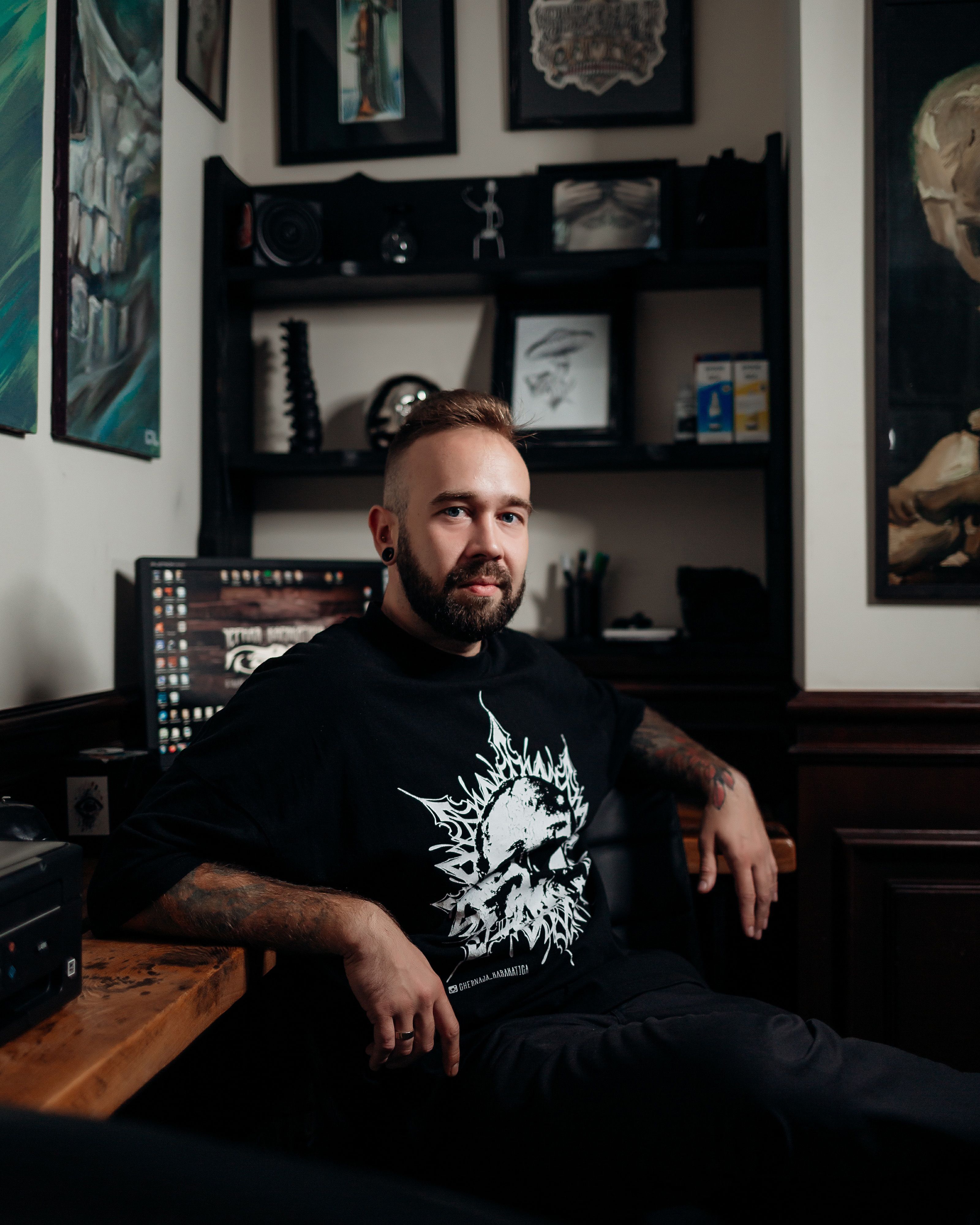
Tattoo as a cultural code: why contemporary society is rethinking this art form. An interview with Roman Zao

Over the past decade, tattooing has increasingly moved away from being perceived as a subcultural marker and toward being understood as a form of personal and social expression. We spoke with Roman Zao — an internationally active tattoo artist, judge at major tattoo conventions, and author of academic publications — about why tattooing has become a cultural code and what society reads through this art form today.

— Roman, you often speak about tattooing as a cultural phenomenon. When do you think this shift in perception began?
— I think it started when society stopped treating the body as a neutral container. We live in a time where identity is no longer fixed — it’s an ongoing process. Tattooing turned out to be one of the most honest tools within that process.

— What makes tattooing a cultural code rather than just decoration?
— Context. A tattoo always speaks not only about the person, but about the time in which it was created. It’s a language with symbols, metaphors, personal and collective meanings. Decoration can be random. Tattooing almost never is.

— Has society learned to “read” tattoos differently than before?
— Absolutely. In the past, tattoos were often read as provocation or group affiliation. Today they’re increasingly understood as a form of dialogue — with oneself, with memory, with culture. Society has become more attentive to meaning, not just form.

— You work across different countries. Does this reading change from culture to culture?
— It changes, but not radically. The accents may shift, but the idea of tattooing as a statement is understood everywhere. That’s another sign that we’re living within a shared global cultural field.

— What role does the artist play in this process?
— The artist is a translator. They help a person articulate an idea visually. In that sense, a tattoo artist works not only with images, but with a person’s inner state. That carries a great deal of responsibility.

— You work exclusively with custom designs. Why does that feel especially important today?
— Because people are tired of repetition. When someone chooses a tattoo, they want to be seen, not fitted into a template. A custom design is a form of respect for individual experience.

— Your academic work focuses on the evolution of tattooing as an art form. What do you see as the key factor behind this shift?
— Reflection. As long as tattooing existed only as practice, it was easy to reduce it to an industry. When research, critique, and dialogue with art history and sociology appeared, tattooing began to enter the cultural space.

— Can tattooing exist on equal terms with other forms of contemporary art?
— It … Read more

Valeriia Guznenkova: not a photographer, but a system of thinking

There is a point at which photography stops being about images. It becomes about decisions. About how a person sees, what they choose to include, what they deliberately exclude. In the case of Valeriia Guznenkova, that shift is not     theoretical — it is visible in the way her work is built and, more importantly, in how it is discussed.

What makes her position unusual is that she does not present herself primarily through aesthetics. The visual result is precise, controlled, recognizable — but it is not the starting point. It is a consequence.

“I don’t think in terms of pictures,” she says. “I think in terms of structure. The image is just the final form of that structure.”

This way of thinking places her practice closer to research than to production.

From practice to method

Most photographers refine their style over time. Guznenkova went in a different direction — she began to formalize it.

Her work gradually evolved into a system. Not a rigid formula, but a repeatable logic. A way of approaching the body, the frame, and the process itself. This is what later became articulated as the Guznenkova Method — a framework that prioritizes construction over correction and understanding over intuition.

But what matters here is not the name. It is the shift in approach.

“I became interested in why certain images work and others don’t,” she explains. “Not on the surface level, but structurally. Once you start asking that question seriously, you can’t go back to shooting randomly.”

This is where her work separates itself from a large part of the industry. Instead of relying on instinct alone, she builds a system that can be analyzed, taught, and reproduced at a conceptual level — even if the visual results remain distinctly her own.

A different kind of influence

Influence in photography is often visible through imitation. Styles get copied, color grading spreads, compositions repeat themselves. In Guznenkova’s case, the effect is more subtle — and more fundamental.

The change happens in the questions people begin to ask.

“I notice that photographers who follow my work stop asking how to edit,” she says. “They start asking how to build. And that’s a completely different starting point.”

This shift is difficult to quantify, but easy to recognize. It marks a transition from surface-level replication to structural thinking. From trying to achieve a look to trying to understand a system.

Around her work, a certain type of community begins to form. Not organized, not declared — but connected through a shared direction. These are people who are no longer satisfied with producing images, but want to understand how those images come into existence.

Beyond the frame

What Guznenkova is developing Read more