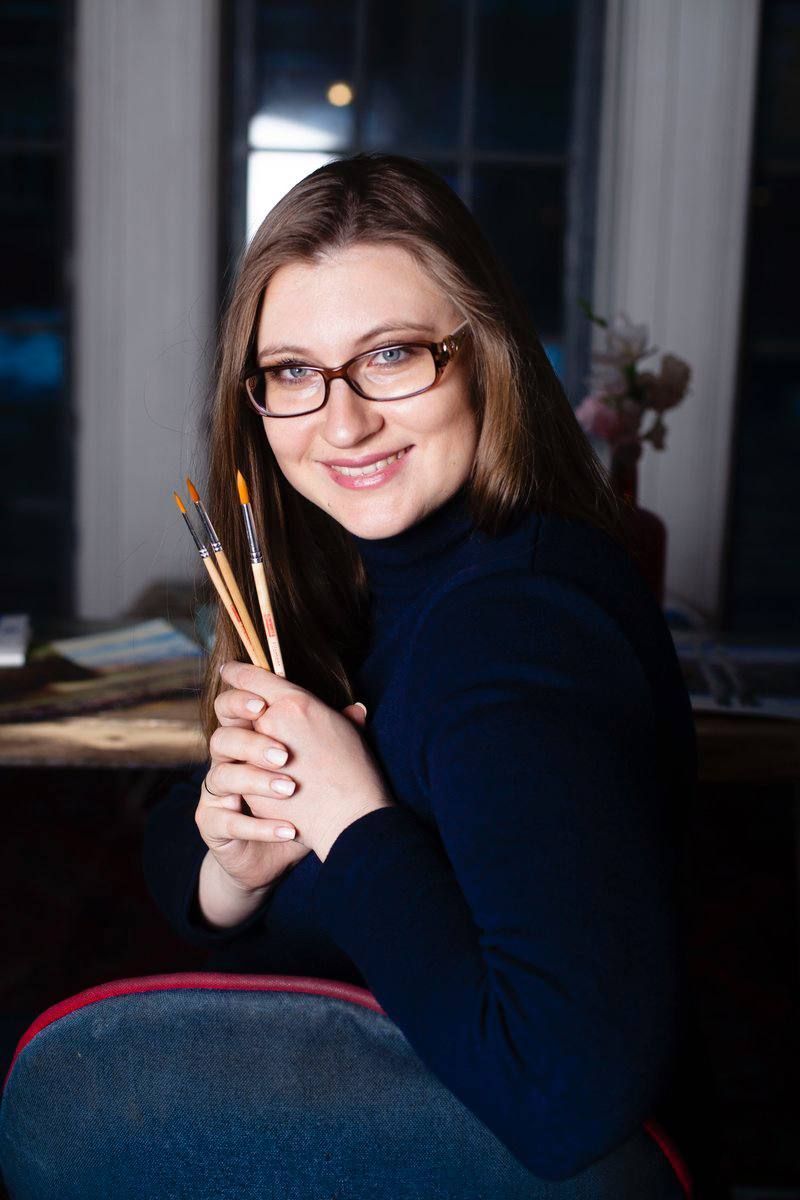
When we think of people capable of uniting others—truly, meaningfully, and spiritually—we rarely think of artists. We’re more likely to imagine politicians, activists, or startup founders. But today’s story is about an exception. Ekaterina Zaznova is an artist who has turned her personal journey into a large-scale international movement.
A watercolorist, researcher, and founder of the projects Pro Akvarel and About Watercolour, she has become a true leader of a new generation of artists. Not just because of her paintings, her technique, or her name on the art scene, but because she created a space of power—an online platform where more than 10,000 artists feel part of a unified world.
I spoke with Ekaterina about how these projects were born, what lies behind the numbers, and why communities are as necessary today as galleries.
— Ekaterina, let’s start with the biggest point. 10,000 artists—that sounds almost unbelievable. Did you plan for such a scale from the beginning?
Not at all. It all started very simply—with a desire not to be alone. I had just returned to art after a long break, and around me were many artists who felt isolated. Each was living in their own bubble, yet we all had similar questions, fears, ideas. I thought—why not bring everyone together?
— Is that how Pro Akvarel began?
Yes. That was the first step. I started with small online marathons—one per month. I’d come up with a topic, make a post, invite people. And very quickly it became clear: people didn’t just want a marathon, they needed a space where they could feel supported, grow, and be seen. The project started growing like a living ecosystem.
— What’s the difference between Pro Akvarel and About Watercolour?
Pro Akvarel was originally a Russian-language project—it united artists from Russia and the CIS. About Watercolour is an international format. It includes artists from the U.S., Europe, and Asia. It’s a kind of bridge between schools, traditions, and techniques.
One project is about roots, the other about wings. Together they function as a single organism.
— Why do you think your projects resonated so deeply with people? What’s special about them?
They’re not about competition. Not about the “best result.” They’re about sincerity, freedom, and the feeling that you’re not alone. It’s a place where you can share your work without fear of being judged. Where you’ll be seen, supported, and inspired.
Plus, we put a huge emphasis on education and growth. We host free masterclasses, offer feedback on artworks, invite expert guests. All of this happens in a warm, supportive community—no snobbery, no pretentiousness.
— What formats do you use? Is everything online?
For now, yes. Online gave us freedom: artists from Australia, Japan, Argentina, Poland—all can participate. We organize marathons, creative prompts, critiques, and online exhibitions.
— Are there names in your community who became well-known thanks to the project?
Yes, and that’s one of the most fulfilling parts. When you see an artist who was too shy to share their work end up featured in international selections, win awards, or open their own school… It’s like watching someone grow wings. I won’t name names, to keep things equal, but there are dozens of such stories already.
— What personally inspires you to keep leading these projects? It must be an enormous amount of work.
Honestly? People. Their eyes, their stories, their thank-you messages. When you get a letter that says, “I stopped painting 15 years ago, but thanks to your project, I started again”—that means more than any exhibition, award, or media coverage. It’s human transformation. And I see it as my mission.
— How do you envision the future evolution of these projects?
I want to launch offline formats: exhibitions, residencies, in-person gatherings. I want artists not just to share their work, but also to hug, laugh, and paint together. We’re also planning to publish a book featuring the best works of our participants—a kind of visual manifesto of the modern watercolor movement.
— Why do you think it’s so important today for people to unite in communities?
Because loneliness has become too common—especially among creatives. Communities restore our sense of belonging, stability, and meaning. They’re where new ideas, projects, and styles are born. Art doesn’t live in a vacuum. It lives between us.
After speaking with Ekaterina, you don’t feel like you’ve just met an artist—you feel like you’ve spoken to an architect of meaning. She builds not only paintings, but connections between people, countries, and perspectives. Her projects aren’t just about watercolor. They’re about how art can be a home. A place where you’re accepted. Where you’re needed. Where you can grow.
10,000 artists around the world isn’t a coincidence. It’s the result of having people like her in the world. And sometimes, one such person can replace an entire system.
Instagram: @zaznova_ekaterina
By Karina Mikhalskaya, Special Visual Arts Correspondent, Europe/USA